

Harman Singh
May 13, 2026 | 6 min. read | Opinion
At Nagar Kirtans and in our Gurdwara Sahibs, we honor the Bandi Singhs - Sikh political prisoners who have spent years, often decades, in Indian jails, sometimes without trial or recourse, and often even after completing their legally mandated sentences. These are men who were taken from their families during the decade of disappearances following the 1984 genocide, swallowed by a system that offered no transparency and no accountability. We honor them not only because their suffering demands to be remembered, but because the act of honoring them is itself a political statement: We see what was done, we know who did it, and we refuse to let the truth be buried.
In our current American political context, honoring them requires us to evaluate our current conditions.
Many Sikhs who survived the 1984 genocide and the years of state violence that followed sought refuge across the globe. Some went to Canada, and others to the United Kingdom - but many came to the United States to build lives, raise children, start businesses, and seek safety in the world’s most powerful democracy. Some immigrated specifically because they or their loved ones faced imprisonment without due process, disappearance without explanation, and persecution without recourse in India. They came here because the United States had, at least in principle, committed to being something different.
What they could not have anticipated is that the country they fled to would, decades later, subject them to a version of that same nightmare.
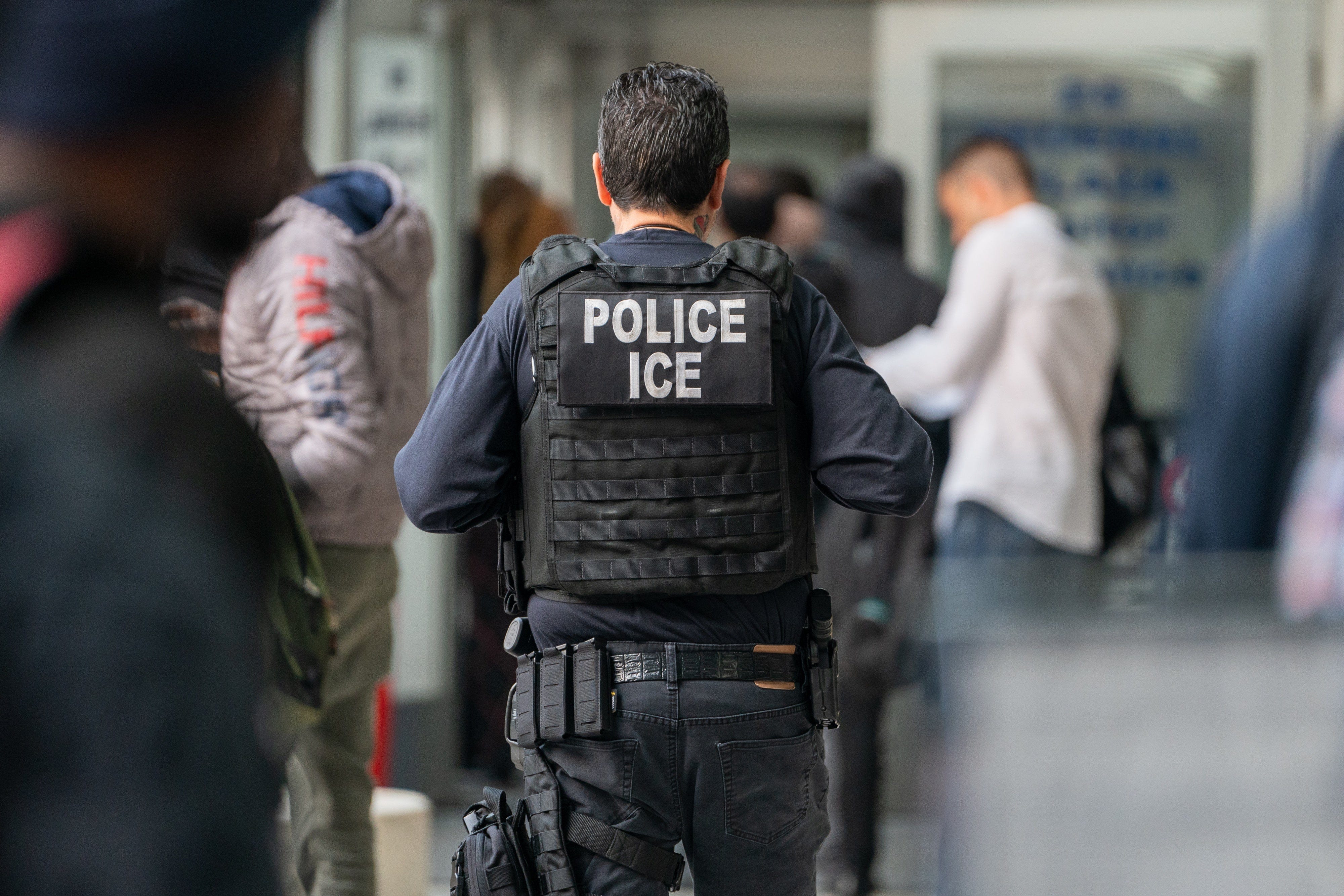
In recent months, the Sikh Coalition has taken on the work of filing habeas corpus petitions for Sikhs detained in ICE facilities across the country. A habeas petition is one of the most fundamental legal tools to protect individual freedom, and allows detainees to challenge their imprisonment before a judge. It’s a constitutional right that protects against indefinite, unlawful, and/or arbitrary detention. The fact that we are filing these with increasing frequency for members of our own sangat reveals exactly where our democracy stands today.
Our petitions involve Sikh truck drivers, and many who are being indefinitely held by ICE originally sought political asylum in the United States. These detentions, therefore, are not isolated incidents; they are the product of a deliberate climate - legal, political, and rhetorical - that has been carefully constructed.
Sikh truckers have been portrayed by this administration as criminals and threats. Turbaned Sikh men have been used repeatedly to put a distinctive face on the claim that immigrants are “poisoning the blood of the country.” This is not happening in a vacuum. The Indian government and its proxies in the diaspora have actively stoked this narrative, feeding a perception that Sikh immigrants are inherently suspect.
Hindutva-affiliated organizations and those using their platforms have even publicly argued that all asylum claims from India are fraudulent because India, they claim, is a democracy, and democracies do not produce asylum seekers. This argument, of course, is as cynical as it is false. India’s status as a nominal democracy has never protected Sikhs from state violence. The families of the disappeared know this. The survivors of 1984 know this. And the Bandi Singhs, who spent decades in Indian jails even after having completed their sentences, know it better than anyone.
Detention isn’t the only threat faced by our sangat members; government policy itself is being weaponized against them. The Department of Homeland Security and U.S. Citizenship and Immigration Services (USCIS) have proposed new rules that will make it significantly harder to apply for asylum or obtain work authorization while an application is being processed. For asylum seekers already here, this rule does not merely create an inconvenience; it deprives them of the ability to work and support themselves while they await a legal decision. By USCIS’s admission, this new rule would have them immediately pause issuing new asylum work permits for anywhere between 14 to 173 years.
Simultaneously, the administration’s attack on non-domiciled commercial driver’s license (CDL) holders has targeted tens of thousands of Sikh truckers who built their livelihoods according to the rules as they existed, only to be told those rules no longer apply. A currently active federal rule is gradually pushing more and more immigrant truckers out of the industry by not allowing them to renew their CDLs, based on nothing other than their (otherwise lawful) immigration status. And additional proposals before Congress and among the various states are even more punitive, ranging from outright CDL revocation to disqualifying those who legally passed their professional testing in languages other than English.
Finally, we cannot avoid acknowledging the conditions of those being held by federal authorities. When members of our sangat are detained, they face a violation specific to who they are. Detainees have reported all manner of mistreatment: a lack of clean food or water, insufficient access to medicine and medical care, extended periods of shackling, and more. Some are even being denied access to their kakaars. As all Sikhs know, denying a Sikh their articles of faith in detention is not a neutral administrative decision. It is a violation of religious freedom that compounds every other indignity of the detention itself.
We have arrived at an irony almost too bitter to name. Those who came to this country because they witnessed a culture of imprisonment without due process in India, who watched family members disappear into a system without accountability, are now being detained without due process or a clear legal basis in American facilities. They are separated from their families, face challenges to their religious freedom, and are left to wonder whether the country they chose is the one they thought it was.
There is a question at the heart of this moment that our community must answer honestly: When the most marginalized among us are under attack, what do we do?
It is easy to advocate for those whose cases are uncomplicated - the citizens, the formally educated, the financially stable. It is harder to stand for the asylum seeker whose status is contested - who fled persecution but has not yet been granted legal recognition of that fact. The Gurus did not condition their protection, and the tradition we inherit does not ask us to evaluate a person’s “worthiness” before responding to their suffering.
How we stand for the most marginalized in our sangat defines our real values, not our stated ones. These values will be visible when this moment is examined in retrospect, just as 1984 is examined today.
As we honor the courageous stance of the Bandi Singhs, let us also reckon with what is happening right now in facilities just a few hours’ drive from our Gurdwaras. The imprisoned are not only in our past; they are here with us. Many are the children of the gems of our Panth who stood courageously against the Indian state’s tyranny to defend the right of Sikhs to practice our faith.
We cannot truly honor the Bandi Singhs while allowing a new generation of our community to be disappeared into an American system that denies them their faith, their livelihood, and their right to due process.
Harman Singh is the Executive Director of the Sikh Coalition, the largest Sikh civil rights organization in the United States.
Baaz is home to opinions, ideas, and original reporting for the Sikh and Punjabi diaspora. Support us by subscribing. Find us on Twitter, Instagram, and Facebook at @BaazNewsOrg. If you would like to submit a written piece for consideration, please email us at editor@baaznews.org.
While the Sikh coalition and others in the community are doing a great job supporting legal rights of Sikh immigrants , truckers and such , some foolhardy idiots in the community are helping anti Sikh forces (including the Hindutva affiliated infrastructure of hate ) with their foolish acts. Please DO NOT fall for the fake ‘Khalistani Movement’ this is being run mainly to paint the entire Sikh community in a negative light and to somehow justify Indian state sponsored violence. Theee so called fake Khalistanis are being used to create election time distractions and also to feed the RSs/ Hindutva / and their 400+ proxies in the US/ Canada with content to amplify negative portrayal of Sikhs. Confront these Khalistanis and investigate their true motives and (likely compromised) credentials