

Jaskaran Sandhu
May 27, 2026 | 6 min. read | Analysis
India’s High Commissioner to Canada, Dinesh Patnaik, has done more than deny allegations of Indian foreign interference in Canada. He has escalated them into an attack on Canada’s national institutions themselves.
In remarks to The Globe and Mail, Patnaik accused Canadian intelligence and law enforcement agencies of corruption, political manipulation, and fabrication. He alleged that CSIS had been “compromised” by Sikh separatists, suggested Khalistan supporters had paid Canadian intelligence officials to report false claims against India, and claimed the investigation into the killing of B.C. Sikh leader Hardeep Singh Nijjar had been “twisted around” and politicized.
After the article was published, Patnaik responded publicly, saying he was “disappointed” by the allegations and that India has maintained “excellent cooperation” with Canadian law enforcement and security agencies. He pointed to visits by National Security Advisors and regular meetings between security agencies as evidence of that cooperation. He also said India has “strong faith in Canada’s institutions” and rejected what he called misleading allegations.
But his clarification did not fully resolve the concern. He did not simply deny the substance of the reported comments. Instead, he said the report was based on an “off-the-record discussion,” had been taken “out of context,” used “selective quotations,” and did not reflect India’s “current assessment of the integrity of institutions.”
That response matters. If claims undermining Canadian institutions were made in an off-the-record setting, Canadians are entitled to ask where else these narratives are being shared, and with whom.


These are not minor diplomatic disagreements. They are serious allegations against Canadian public servants, police officers, intelligence officials, and national security agencies. They accuse Canada’s institutions of being corrupt, politically directed, or manipulated by the very Sikh communities that have been warning for years about Indian foreign interference and transnational repression.
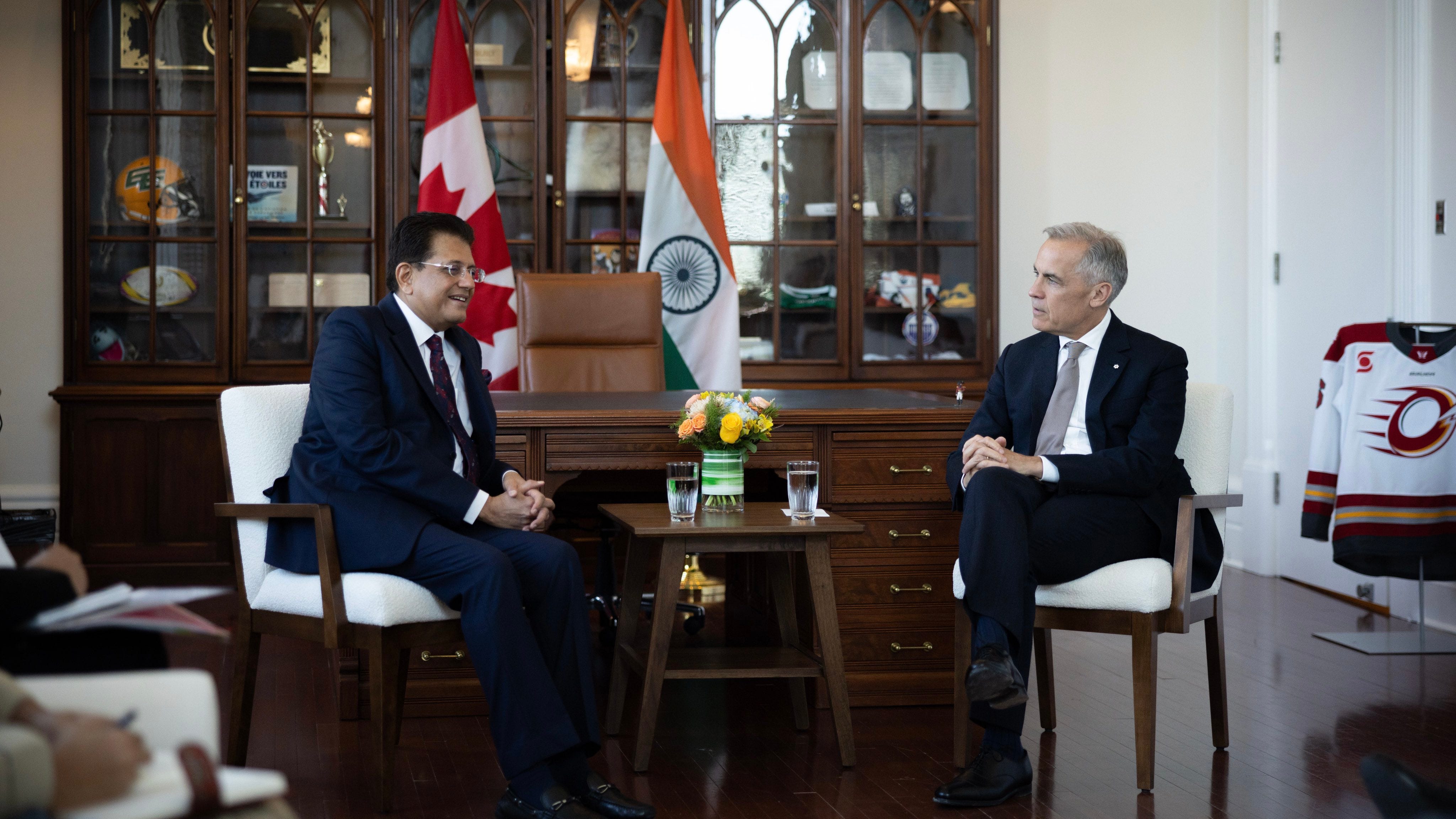
The timing makes this even more alarming. Patnaik’s remarks came as Canada was hosting what has been described as the largest Indian trade delegation ever to visit the country, led by Indian Commerce and Industry Minister Piyush Goyal, while both countries continue discussions around deepening economic ties and advancing a Comprehensive Economic Partnership Agreement.
That is the context Canadians must understand.
While Ottawa appears eager to repair relations and reopen economic channels, India’s top diplomat in Canada has publicly, or at a minimum, privately advanced narratives that undermine the credibility of Canadian security agencies.
This raises a basic question: is Canada prepared to defend its sovereignty, or is humiliation now simply the cost of doing business with India?
The High Commissioner’s comments are not happening in a vacuum. They directly contradict a growing public record from Canadian institutions. CSIS’s 2025 Public Report identified India as one of the main perpetrators of foreign interference and espionage against Canada. It also stated that India has historically cultivated covert relationships with Canadian politicians, journalists, and members of the Indo-Canadian community to advance its interests, including through transnational repression tactics such as surveillance and coercion intended to suppress criticism of the Indian government.
CSIS was also clear on a point India and its defenders often blur: advocacy for Khalistan is lawful political activity in Canada.
That distinction matters. India’s strategy has long relied on collapsing Sikh political expression into extremism. The goal is not merely to challenge individual activists. It is to stigmatize an entire community, chill dissent, and pressure Canadian institutions into treating lawful political speech as a security threat.
The Foreign Interference Commission’s final report also identified India as the second most active country engaging in electoral foreign interference in Canada. It found that India focuses its foreign interference activities on the Indo-Canadian community and prominent non-Indo-Canadians, targets all levels of government, and uses diplomatic officials and proxies in Canada. The report further stated that India uses disinformation as a key form of foreign interference against Canada.
Against that record, Patnaik’s allegations are not merely defensive. They resemble the very disinformation pattern Canadian institutions have warned about: deny, deflect, discredit, and then accuse the victims and investigators of fabrication.
This is a familiar playbook. When diaspora communities raise concerns about surveillance, intimidation, threats, or state-linked violence, they are dismissed as extremists. When Canadian agencies investigate, they are accused of being compromised. When public inquiries identify India’s activities, the findings are framed as politically motivated. When Sikh Canadians demand accountability, their citizenship and loyalty are questioned.
The result is a dangerous inversion.
The community that has been targeted is portrayed as the threat. The foreign state accused of interference casts itself as the victim. Canadian institutions are pressured to prove they are not captured by the very diaspora community they are supposed to protect.
Canada cannot allow this inversion to stand.
This is about more than Sikh Canadians. It is about whether foreign governments can intimidate diaspora communities in Canada and then attack Canadian institutions when they are called out. It is about whether trade and diplomatic normalization will be allowed to override public safety, democratic integrity, and the rule of law.
Canada cannot allow a foreign government to use access to Canadian officials, journalists, trade leaders, or political spaces to spread claims that undermine Canadian institutions and place Sikh Canadians under suspicion.
The question before Ottawa is not whether Canada should engage India. The question is whether Canada can engage India while pretending that transnational repression, disinformation, foreign interference, and attacks on Canadian sovereignty are side issues.
They are not.
For Sikh Canadians, this moment is not abstract. It is about whether their government will defend their right to lawful political expression, their safety, and their equal place in Canadian democracy.
For Canada, it is a test of national self-respect.
Jaskaran Sandhu is the co-founder of Baaz. He is a lawyer and previously served as Executive Director for the World Sikh Organization of Canada and as a Senior Advisor to Brampton’s Office of the Mayor. You can find Jaskaran on Twitter at @JaskaranSandhu_
Baaz is home to opinions, ideas, and original reporting for the Sikh and Punjabi diaspora. Support us by subscribing. Find us on Twitter, Instagram, Facebook, and TikTok at @BaazNewsOrg. If you would like to submit a written piece for consideration, please email us at editor@baaznews.org.
It is sad to see how easily our less educated , less smart Gullible Jatt youth easily fall into the traps these anti Sikh forces set up. Hitting the headlines for all the wrong reason : why would Canadian politicians want tobe seen with such people ? Our idiotic antics just make very bad optics for any serious politician to care for us. All this Khalistan nonsense does nothing but gains negative media attention and only helps the Hindutva / right wing ecosystem of hate . Please stop supporting Khalistanis . Instead , come out United educating the world on past Indian government’s massive human rights violations, false flag operations and such. No one wants Khalistan. All Sikhs want is justice and dignity . A message to Jatt youth : you arent special - no body cares about you : esp your arrogant / obnoxious behavior. Lie low , establish deeper roots , invest your resources wisely and don’t let Indian politics (esp Khalistanis) sway you.